I am a third-year PhD student at UCL’s SpaceTimeLab, supervised by Dr James Haworth, Dr Aldo Lipani, and Dr Stefano Cavazzi. My research is funded by UKRI (EPSRC) and Ordnance Survey (OS).

I study how people communicate about place: what they ask, how they ask it, and what this reveals about human spatial cognition at scale. I work at the intersection of GeoAI, NLP, and HCI, using query logs and conversational AI datasets to characterise spatial information needs across interfaces. I’m particularly interested in subjective spatial questions – those that go beyond what deterministic GIS can answer, and expose the gap between place as data and place as lived experience.

I am co-founder and CTO of Safest Way, a Geovation-backed startup developing safety-centric pedestrian navigation. Read about it in The Conversation.

Publications

The Scenic Route to Deception paper illustration MIRAGE @ IUI 2026
The Scenic Route to Deception: Dark Patterns and Explainability Pitfalls in Conversational Navigation
Ilya Ilyankou, Stefano Cavazzi, James Haworth
[Conversational navigation risks turning routing from a verifiable geometric task into opaque persuasion; a neuro-symbolic architecture grounding LLM outputs in pathfinding algorithms offers a path to trustworthy, explainable pedestrian navigation.]
StreetVibes pipeline overview GISRUK 2026
StreetVibes: An Open, Modular Pipeline for Reproducible Street-Level Urban Perception Analysis
Ilya Ilyankou, Stefano Cavazzi, James Haworth
[A privacy-preserving, open-source tool that converts street-level imagery into semantic urban indicators by orchestrating OSM, Mapillary, and local vision-language models.]
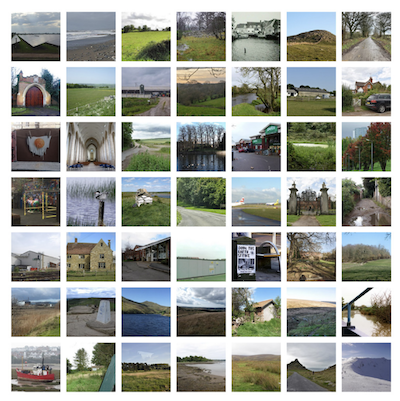
Clip the Landscape landscape image examples Remote Sensing Applications: Society and Environment (2026)
CLIP the Landscape: Automated Tagging of Crowdsourced Landscape Images
Ilya Ilyankou, Natchapon Jongwiriyanurak, Tao Cheng, James Haworth
[What you see isn't always what gets tagged. A CLIP-based classifier combining image, location, and title embeddings to predict geographic context tags from landscape photos, improving spatial understanding in data-sparse regions.]
The model framework of CaLLiPer SIGSPATIAL'25
Into the Unknown: Applying Inductive Spatial-Semantic Location Embeddings for Predicting Individuals' Mobility Beyond Visited Places
Xinglei Wang, Tao Cheng, Stephen Law, Zichao Zeng, Ilya Ilyankou, Junyuan Liu, Lu Yin, Weiming Huang, Natchapon Jongwiriyanurak
[Multimodal location embeddings fusing coordinates and POI semantics via contrastive learning improve individual mobility prediction, particularly for previously unseen locations.]
V-RoAst workflow CV4DC @ ICCV'25
V-RoAst: Visual Road Assessment. Can VLM be a Road Safety Assessor Using the iRAP Standard?
Natchapon Jongwiriyanurak, Zichao Zeng, June Moh Goo, Xinglei Wang, Ilya Ilyankou, Kerkritt Sriroongvikrai, Nicola Christie, Meihui Wang, Huanfa Chen, James Haworth
[A zero-shot VQA framework using vision-language models to classify iRAP road safety attributes from street-level imagery, reducing the cost of infrastructure risk assessment in low-resource settings.]
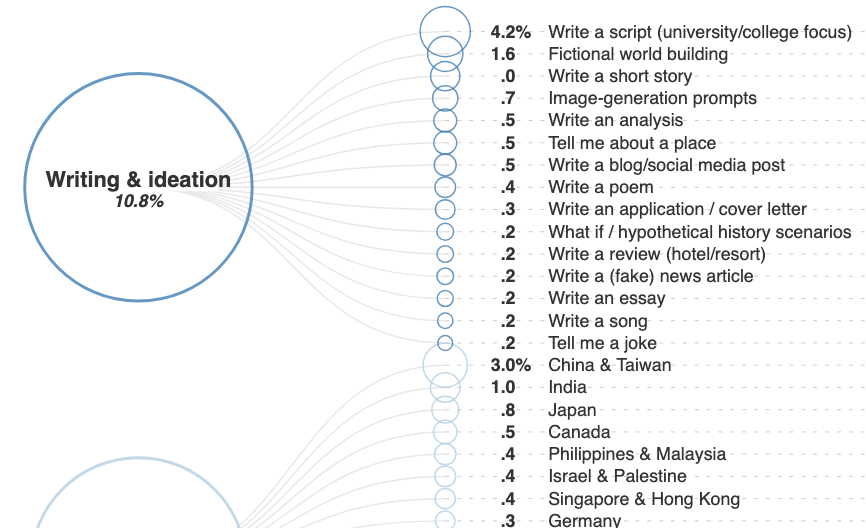
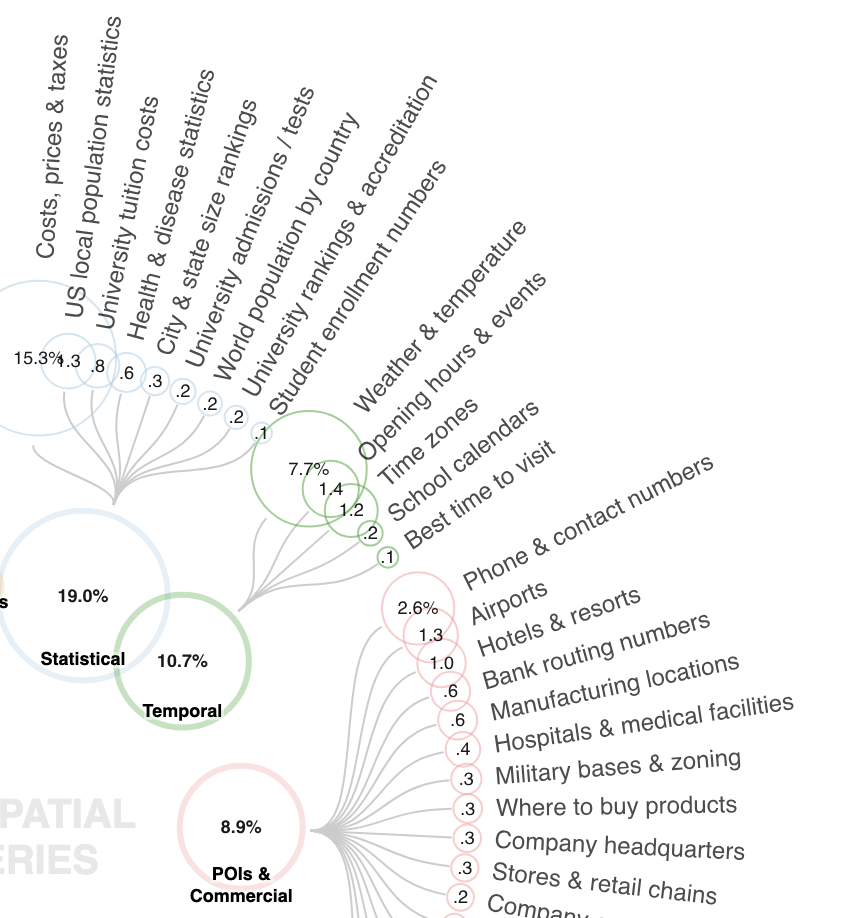
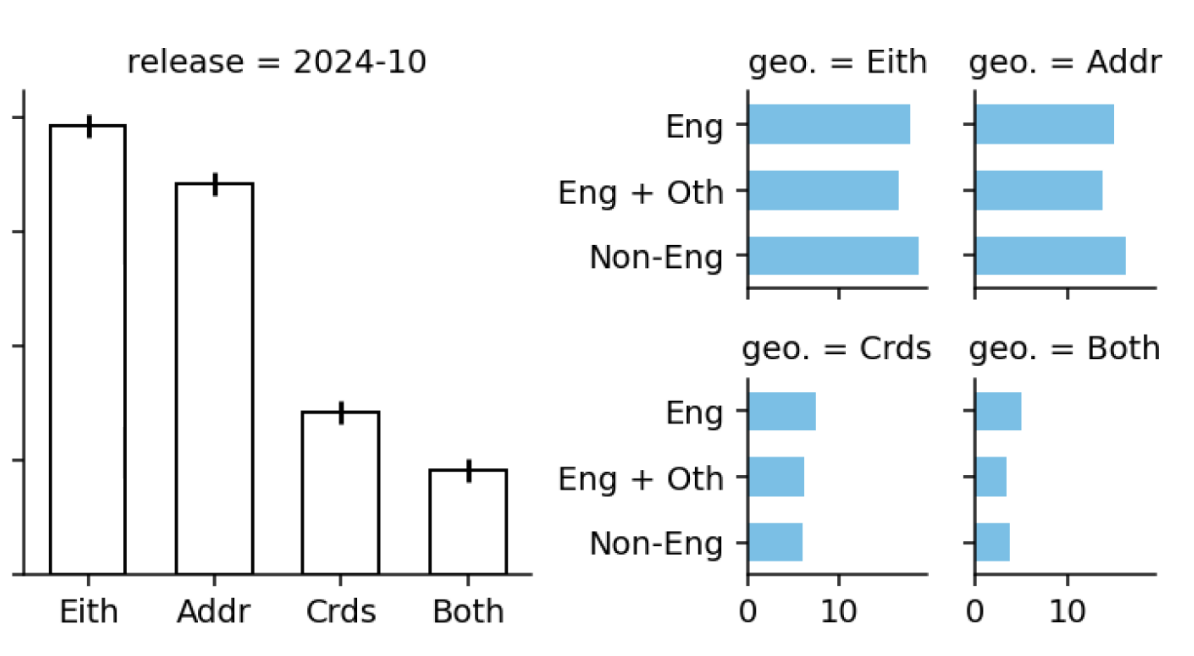
Quantifying Geospatial paper Figure 2 SIGSPATIAL'24
Quantifying Geospatial in the Common Crawl Corpus
Ilya Ilyankou, Meihui Wang, Stefano Cavazzi, James Haworth
[Nearly one in five Common Crawl documents contains geospatial information, offering a quantitative basis for understanding why LLMs develop spatial reasoning capabilities.]
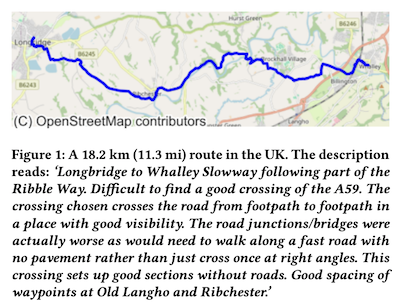
CC-GPX Figure 1 (multimodal dataset entry example) SIGSPATIAL'24
CC-GPX: Extracting High-Quality Annotated Geospatial Data from Common Crawl
Ilya Ilyankou, Meihui Wang, Stefano Cavazzi, James Haworth
[A pipeline to extract paired GPX tracks and human-written descriptions from Common Crawl, yielding a multimodal dataset of 1,416 real outdoor routes for geospatial and NLP research.]
CycleTrajectory Figure 2 SuMob @ SIGSPATIAL'24
CycleTrajectory: An End-to-End Pipeline for Enriching and Analyzing GPS Trajectories to Understand Cycling Behavior and Environment
Meihui Wang, James Haworth, Ilya Ilyankou, Nicola Christie
[An end-to-end pipeline that map-matches cyclists' GPS trajectories to OpenStreetMap, enriching raw data with road semantics and derived mobility metrics.]
GeoExT group photo GeoExT @ ECIR 2024
Do Sentence Transformers Learn Quasi-Geospatial Concepts from General Text?
Ilya Ilyankou, Aldo Lipani, Stefano Cavazzi, Xiaowei Gao, James Haworth
[Fine-tuned sentence transformers show zero-shot capacity to match hiking queries to route descriptions, hinting at untrained geospatial utility.]

Professional experience

  • Intern, The Alan Turing Institute (Autumn 2025)

  • Data engineer, Geolytix (2022–2025)

  • Full-stack developer, CTData Collaborative (2018–2022)

Teaching

As a postgraduate teaching assistant at UCL (2024–25) and lab demonstrator at Birkbeck (2025–26), I have supported modules in geospatial programming, spatial analysis, and data analytics.

Education

  • PhD in Geomatic Engineering / Geospatial AI – University College London (UCL), 2023–2027

  • MSc in Geographic Information Science (Distinction) – University of Leeds, 2019–2022

  • BSc in Computer Science and Studio Arts (summa cum laude, Phi Beta Kappa) – Trinity College (Connecticut), 2014–2018

  • Worcester College, University of Oxford – Visiting student focusing on machine learning and game theory, 2016–2017

Hands-On Data Visualization

Hands-On Data Visualization: Interactive Storytelling from Spreadsheets to Code (O’Reilly), co-authored with Jack Dougherty. Available open-access in English, and translated into Korean and Traditional Chinese.

Since 2022, all royalties (currently over $5,000) have been donated to humanitarian relief efforts in Ukraine, most recently to The HALO Trust.
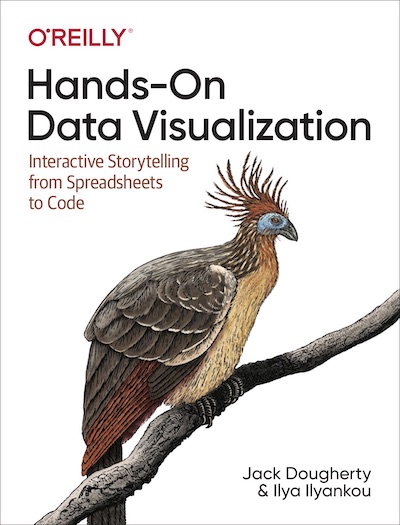
Hands-On Data Visualization book cover